

The Archivist and His Records
Maurice Bond analyses the changing landscape of primary source historical research in Britain.
Maurice Bond analyses the changing landscape of primary source historical research in Britain.
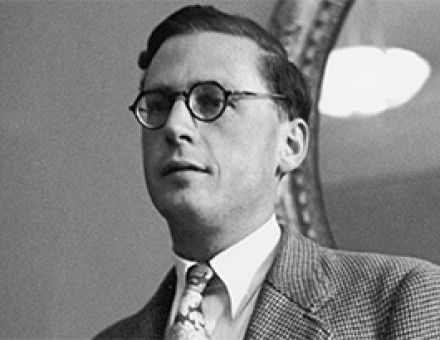
Supreme stylist, polymath, linguist and scourge of specialisation, Hugh Trevor-Roper, whose centenary falls this month, continues to divide opinions. Blair Worden considers his life and legacy.
Written by a master, Mérimée declared, history was ‘as much superior to all novels and all plays as a diamond is to paste’. By A.W. Raitt.
John Raymond offers the picturesque records of an amiable spendthrift who lived through the greater part of one of the most eventful centuries of English history.
David G. Chandler describes how the trouble Napoleon took over the interpretation of events at Marengo shows how deeply they had disturbed him.

The experience and approach of a historian: Roger Lockyer on writing historical biography.
As it has fallen to the lot of our generation to relive the experiences of a Jeremiah and Josephus, writes Martin Braun, it is not surprising that a literature of historical self-analysis has sprung up in post-war Europe—most notably in Germany.
‘The pleasure of books possessed me from childhood’ wrote this twelfth-century historian. Among other work, William of Malmesbury, writes J.J.N. McGurk, produced an Historia Novella, extending until 1142.
When the founders of the American Historical Society discussed their plans in 1791, writes Elisabeth Linscott, they determined ‘to seek and find, to preserve and communicate’, the precious records of their country’s past.
The author of the History of My Own Time was both a keen churchman and a compulsive writer. Mary Delorme describes how Burnet's style, whether graphic, humorous or pompous, was usually as free and expansive as the historian himself.